Mary Draper Ingles Sites
About Mary Draper Ingles
In the 1750’s, southwestern Virginia was still a sparsely settled frontier, but this land drew a young woman who continues to have untold influence - even in the 21st Century. Born in Philadelphia in 1732 to Irish immigrants, Mary Draper, along with her family, became part of the western migration as settlers moved down The Great Wagon Road into Virginia. Eventually she married William Ingles and settled in Drapers Meadows in what is present-day Blacksburg.
In the midst of the 1750s the frontier was in the grips of conflict leading to the French and Indian War. Mary and her family were drawn into this conflict when a group of Shawnees entered the settlement to raid. Many members of the community were killed, and Mary and other family members were captured by the Shawnees and taken hundreds of miles into the frontier wilderness. For the Shawnee and the other American Indians taking captives and adopting them into their society was a practice to help rebuild their populations that had been devastated by disease and conflict.
Mary Draper Ingles summoned tremendous physical and mental strength as she escaped from her captors and walked through Kentucky, West Virginia, and Virginia, navigating only through memory and by following significant waterways (the Ohio, Kanawha, and New Rivers), back to her home valley. Later she and her husband moved to the Radford area where they established a homestead and ferry operation. Mary lived here until her death in 1815. What transpired between these life episodes is a story that has been told and retold through books and articles, an outdoor drama, and at festivals and living history reenactments throughout a four-state region. Her story will inspire you.
Mary’s Impact through the Years
Each year thousands of visitors attend a play, celebration or festival for Mary Draper Ingles somewhere in one or more of the four states—Virginia, West Virginia, Kentucky and Ohio—through which she journeyed. Because of numerous books and articles, including the “New York Times” bestseller—“Follow the River”—and several movies, her recognition goes well beyond this region.
There are many sites throughout the New River Valley, Virginia and beyond that help illustrate the life and times of Mary Draper Ingles.
Monuments & Recognitions
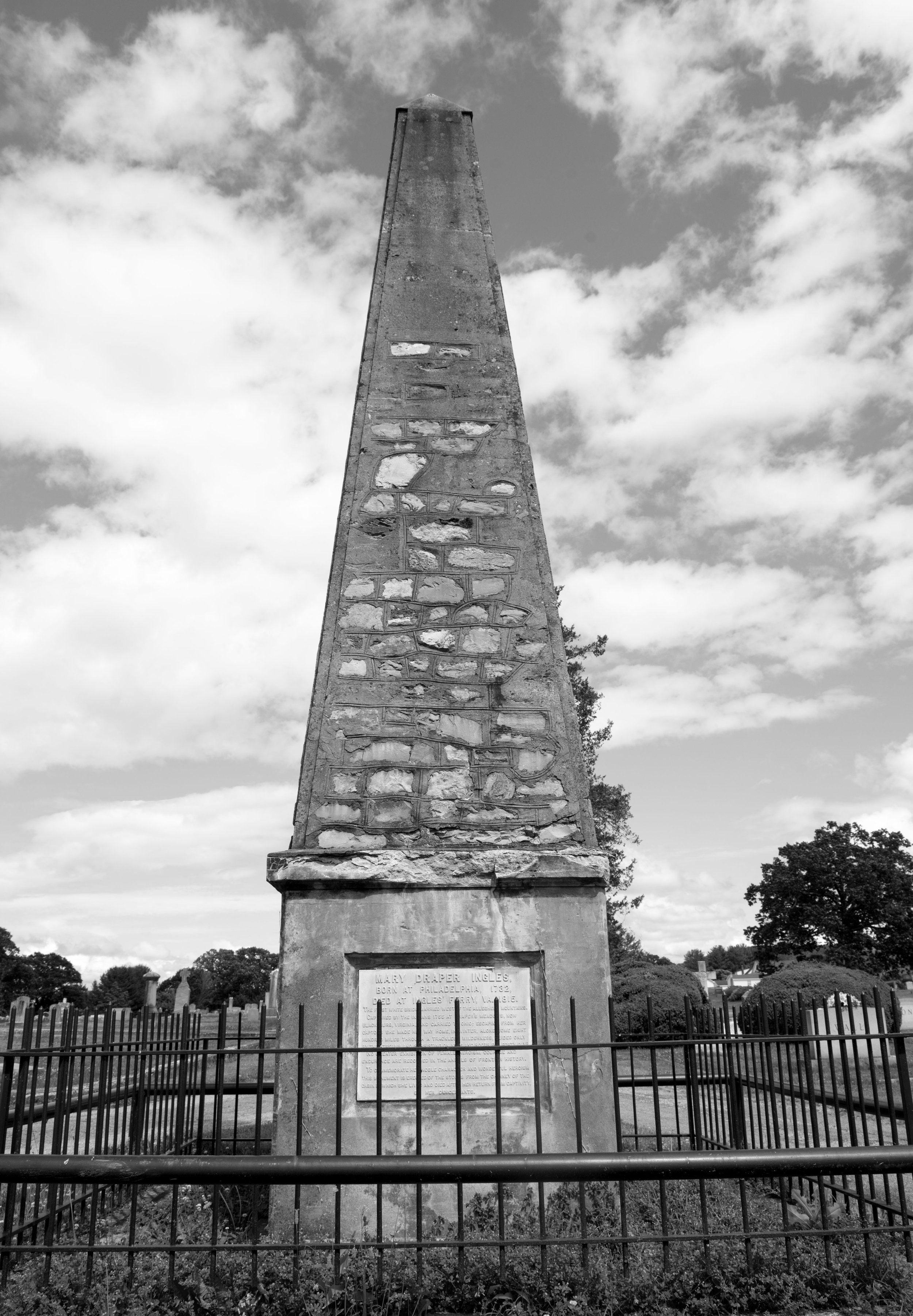
Erected in 1909, the 22-ft monument is constructed of chimney stone from the original Ingles Farm cabin.
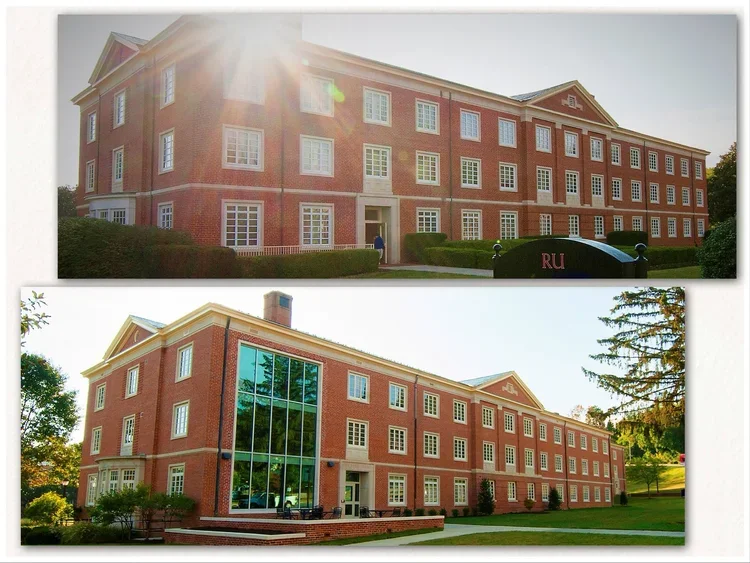
Located on Radford University campus, these residence halls are part of the Moffett Quad, which honors women from Virginia history. Draper Hall is named in honor of Bettie Draper, the sister-in-law of Mary Draper Ingles. Ingles Hall recognizes the heroic journey of Mary Draper Ingles.
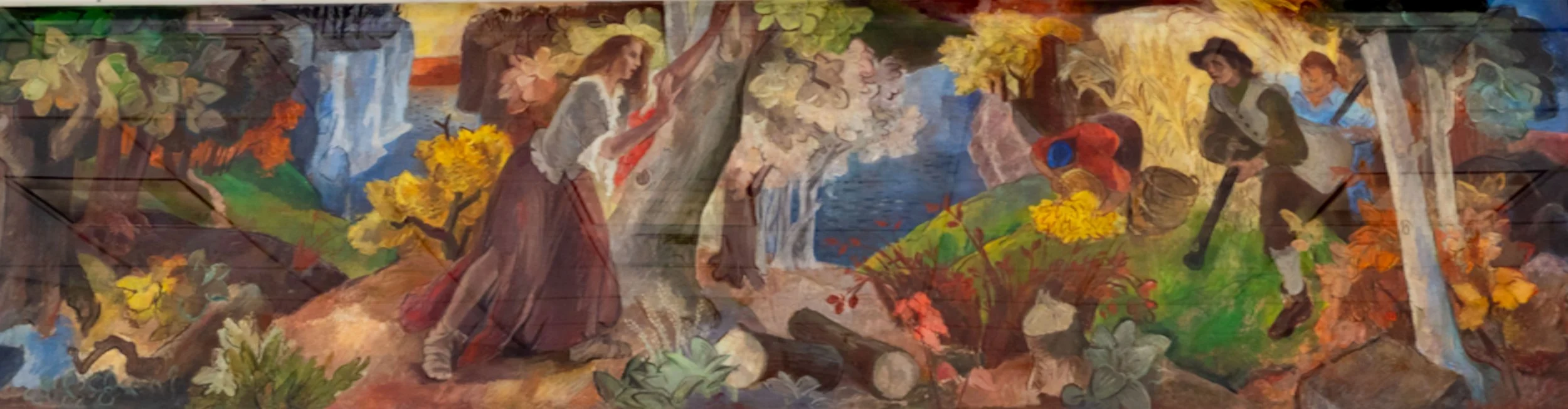
This artwork was commissioned by The Fine Arts Section of the U.S. Treasury Department under the New Deal programs. “The Return of Mary Draper Ingles,” oil on canvas painted in 1942 by Alexander B. Clayton
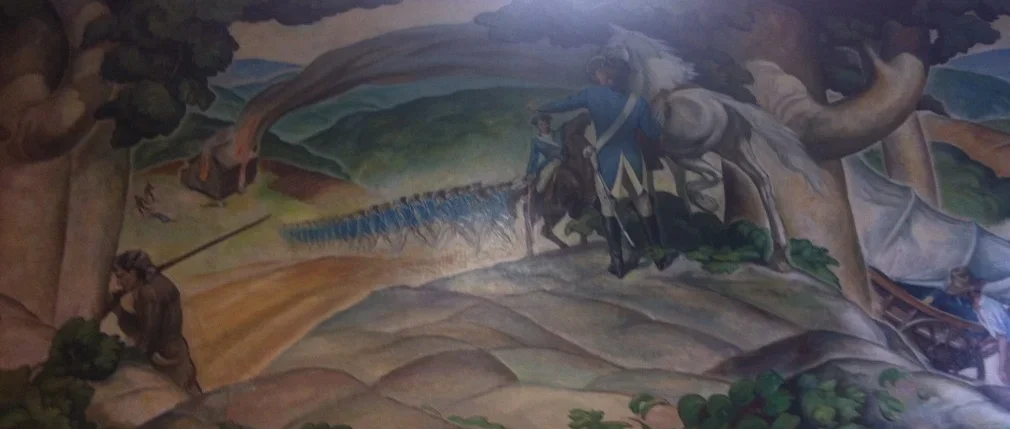
U.S. Post Office Mural – This artwork was commissioned by The Fine Arts Section of the U.S. Treasury Department under the New Deal programs. “Great Road,” oil on canvas painted by John W. de Groot in 1939.
Christiansburg Post Office, 2 E. Main St., Christiansburg, VA 24073
Museums & Historic Sites
Located in the 1875 home of Gen. Gabriel C. and Nannie Radford Wharton, Glencoe explores the history of Radford, the New River Valley and beyond. The museum provides a 3-in-one experience with the Historic Residence, History Exhibits and the Art Gallery. The museum highlights the contributions of all those who left their influence and built the area, including Native Americans, African Americans and settlers like Mary Draper Ingles and her family. The exhibits explore the role of the New River in the development of transportation and industry and many other topics. The Art Gallery provides visitors with great local art in addition to a well- stocked Gift Shop.
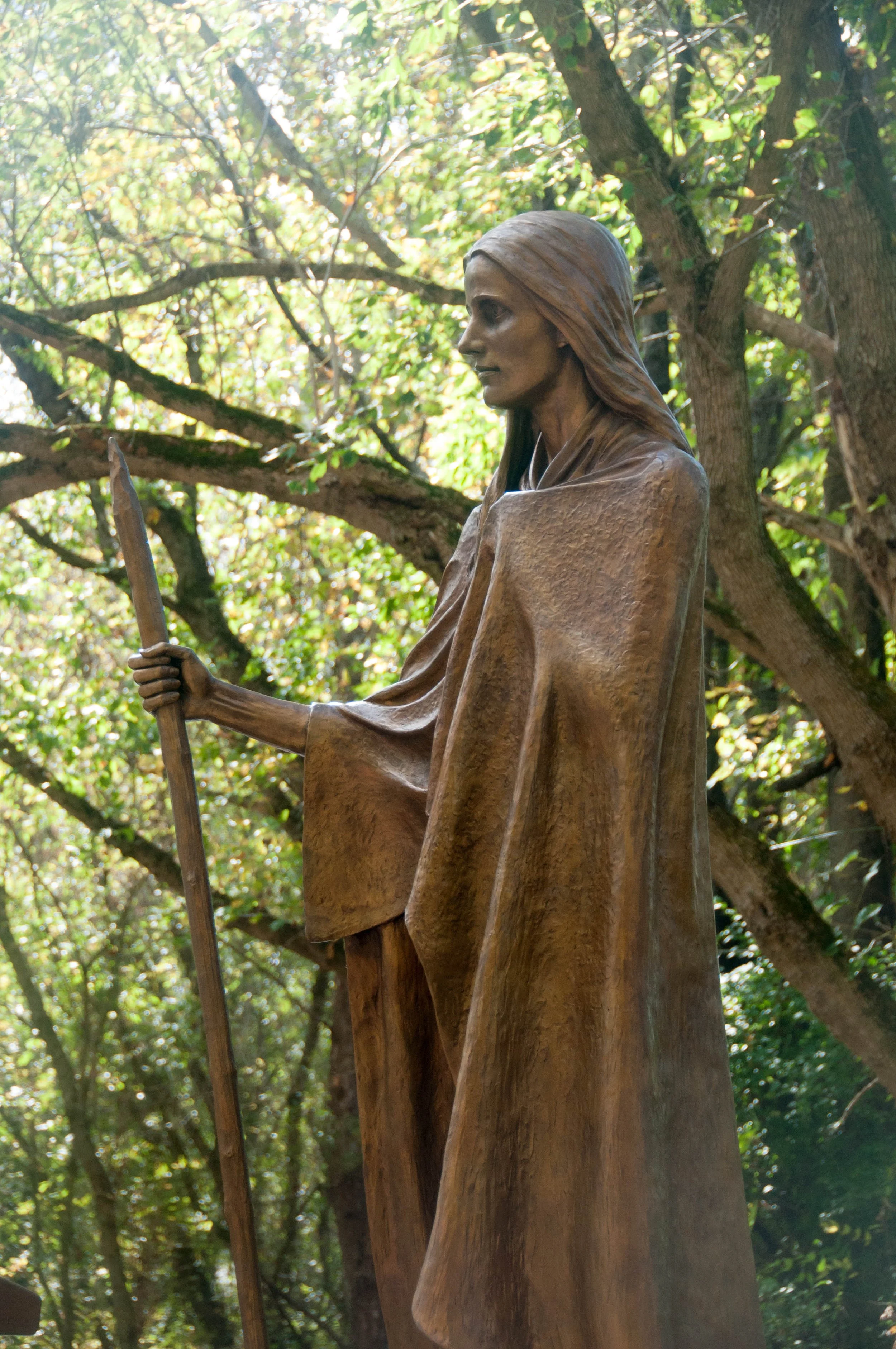
Nestled on the grounds of Glencoe Mansion is this pocket park that has been declared a Virginia Treasure. The park is the home to the stunning bronze sculpture by artist Matt Langford depicting the frontier heroine. Also at the site is the New River Train Observatory, which was designed and built by graduate students from Virginia Tech’s School of Architecture + Design. The park is under development to become a haven of native species of plants and wildlife.
Open dawn to dusk.
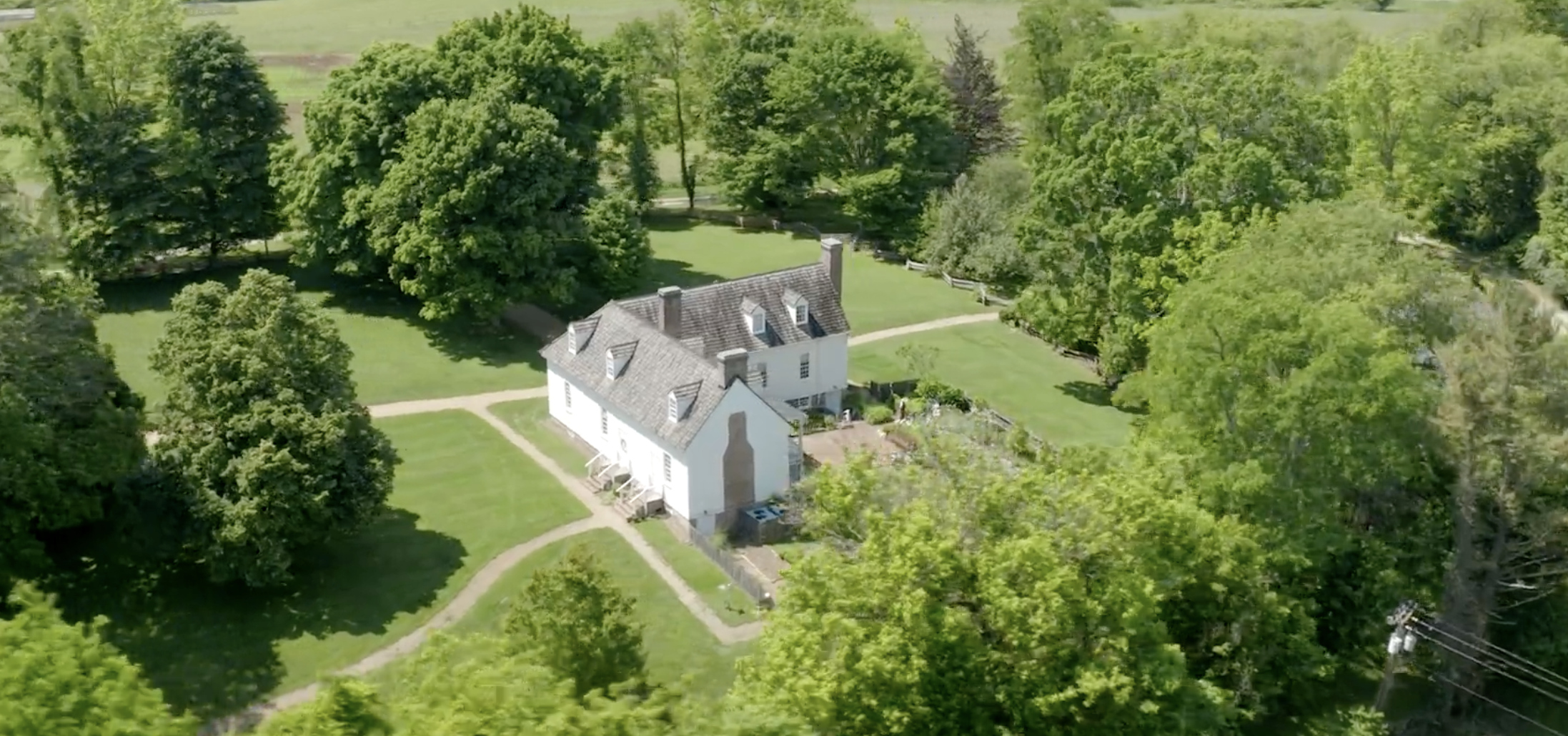
Built in 1774, Smithfield was the home of Revolutionary War patriot William Preston. The home, designed in the Tidewater plantation style, provided a haven of aristocratic elegance and became the social and political center of this frontier region. The site features costumed interpreters, heirloom gardens, special events and a museum store.
HISTORICAL MARKERS
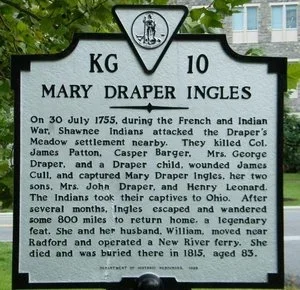
On 30 July 1755, during the French and Indian War, Shawnee Indians attacked the Draper's Meadow settlement nearby. They killed Col. James Patton, Casper Barger, Mrs. George Draper, and a Draper child, wounded James Cull, and captured Mary Draper Ingles, her two sons, Mrs. John Draper, and Henry Leonard. The Indians took their captives to Ohio. After several months, Ingles escaped and wandered some 800 miles to return home, a legendary feat. She and her husband, William, moved near Radford and operated a New River ferry. She died and was buried there in 1815, aged 83.
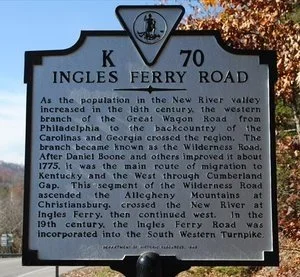
As the population in the New River valley increased in the 18th century, the western branch of the Great Wagon Road from Philadelphia to the backcountry of the Carolinas and Georgia crossed the region. The branch became known as the Wilderness Road. After Daniel Boone and others improved it about 1775, it was the main route of migration to Kentucky and the West through Cumberland Gap. This segment of the Wilderness Road ascended the Allegheny Mountains at Christiansburg, crossed the New River at Ingles Ferry, then continued west. In the 19th century, the Ingles Ferry Road was incorporated into the South Western Turnpike.
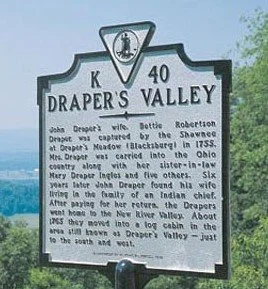
John Draper's wife, Bettie Robertson Draper, was captured by the Shawnee at Draper's Meadow (Blacksburg) in 1755. Mrs. Draper was carried into the Ohio country along with her sister-in-law Mary Draper Ingles and five others. Six years later John Draper found his wife living in the family of an Indian chief. After paying for her return, the Drapers went home to the New River Valley. About 1765 they moved into a log cabin in the area still known as Draper’s Valley--just to the south and west.
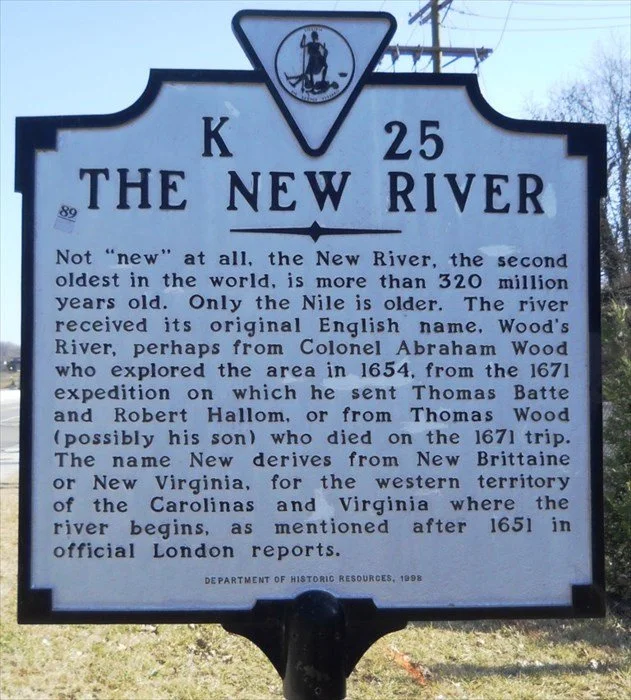
Not “new” at all, the New River, the second oldest in the world, is more than 320 million years old. Only the Nile is older. The river received its original English name, Wood's River, perhaps from Colonel Abraham Wood who explored the area in 1654, from the 1671 expedition on which he sent Thomas Batte and Robert Hallom, or from Thomas Wood (possibly his son) who died on the 1671 trip. The name New derives from New Brittaine or New Virginia, for the western territory of the Carolinas and Virginia where the river begins, as mentioned after 1651 in official London reports.
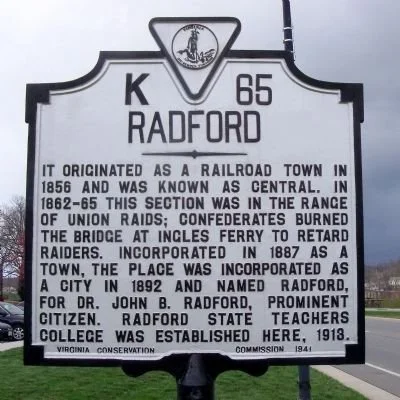
It originated as a railroad town in 1856 and was known as Central. In 1862-65 this section was in the range of Union raids; Confederates burned the bridge at Ingles Ferry to retard raiders. Incorporated in 1887 as a town, the place was incorporated as a city in 1892 and named Radford, for Dr. John B. Radford, prominent citizen. Radford State Teachers College was established here, 1913.
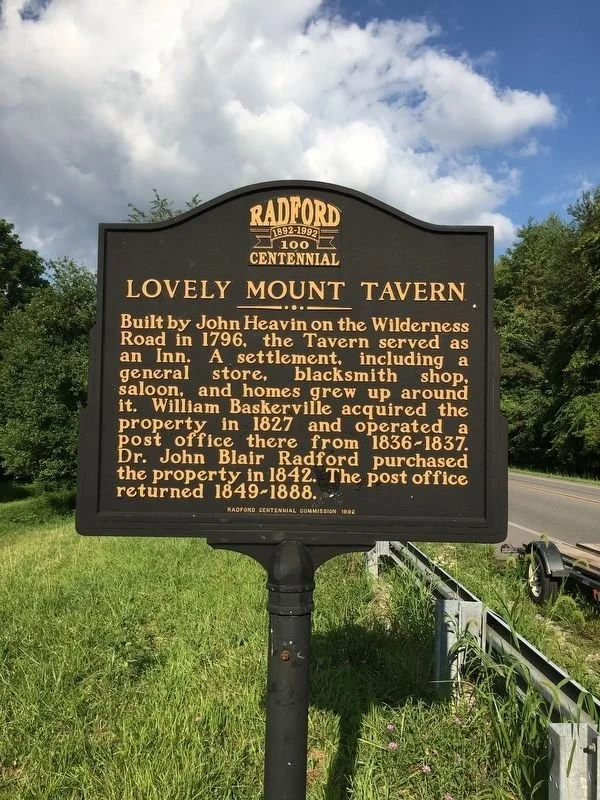
Built by John Heavin on the Wilderness Road in 1796, the Tavern served as an Inn. A settlement, including a general store, blacksmith shop, saloon and homes grew up around it. William baskerville acquired the property in 1827 and operated a post office there from 1836-1837. Dr. John Blair Radford purchased the property in 1842. The post office returned 1849-1888.
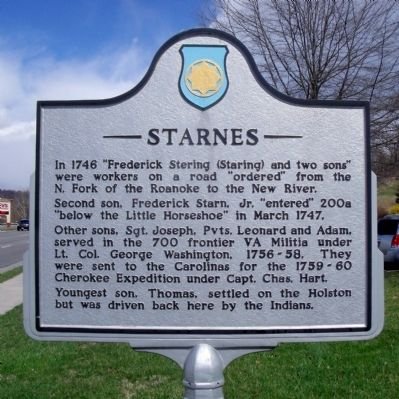
In 1746 “Frederick Stering (Staring) and two sons” were workers on a road “ordered” from the N. Fork of the Roanoke to the New River. Second son, Frederick Starn, Jr., “entered” 200a “below the Little Horseshoe” in March 1747. Other sons, Sgt. Joseph, Pvts. Leonard and Adam, served in the 700 frontier VA Militia under Lt. Col. George Washington, 1756-58. They were sent to the Carolinas for the 1759-60 Cherokee Expedition under Capt. Chas. Hart. Youngest son, Thomas, settled on the Holston but was driven back here by the Indians.
(side b)
Frederick Starn (Staring, ca. 1700 - 1774) immigrated to NY from the German Palatinate. With his wife, Mary (Goldman), and six children, he left the Mohawk Valley in NY to settle on the New River, about 2½ miles east of here, by 1744. A 1746, 500a survey designated the “Starn Place in the bend of the river”. 200a were entered “on ye mouth of Crab Creek” in 1747. During the French and Indian War, Frederick Starn was wounded and captured by the Indians in July of 1775 but escaped. He is the ancestor of this large old Southern family who are of German descent.
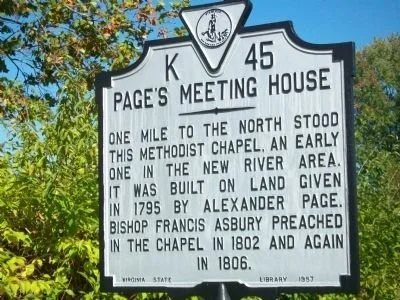
One mile to the north stood this Methodist Chapel, an early one in the New River area. It was built on land given in 1795 by Alexander Page. Bishop Francis Asbury preached in the chapel in 1802 and again in 1806.
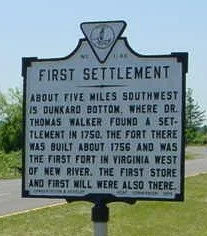
About five miles southwest is Dunkard Bottom, where Dr. Walker found a settlement in 1750. The fort there was built about 1756 and was the first fort in Virginia west of New River. The first store and first mill were also there.
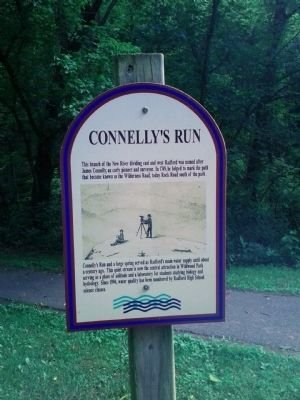
This branch of the New River dividing east and west Radford was named after James Connelly, an early pioneer and surveyor. In 1749, he helped to mark the path that became known as the Wilderness Road, today Rock Road south of the Park.
Connelly's Run and a large spring served as Radford's main water supply until about a century ago. This quiet stream is now the central attraction in Wildwood Park serving as a place of solitude and a laboratory for students studying biology and hydrology. Since 1994, water quality has been monitored by Radford High School science classes.
Beyond the New River Valley
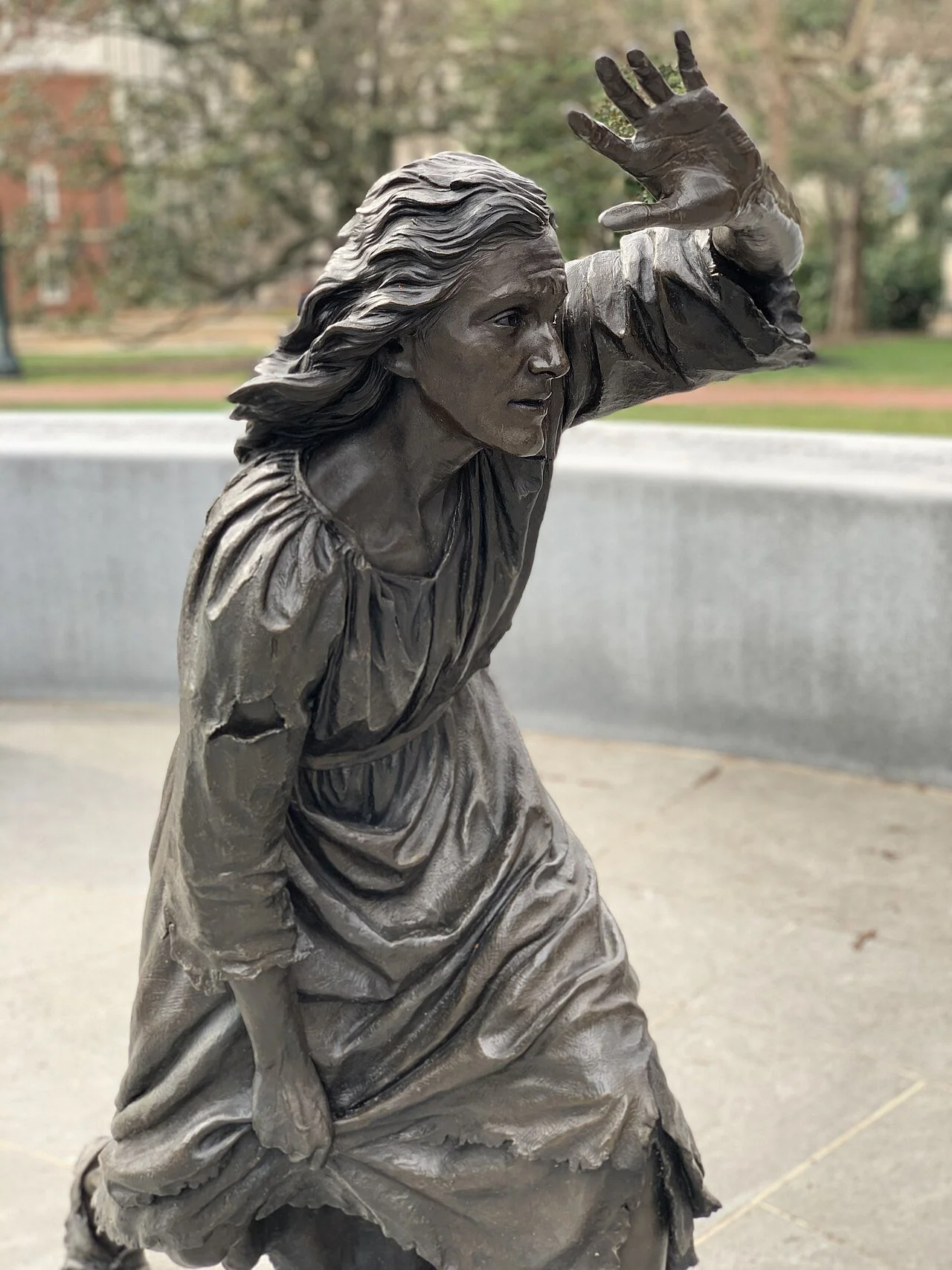
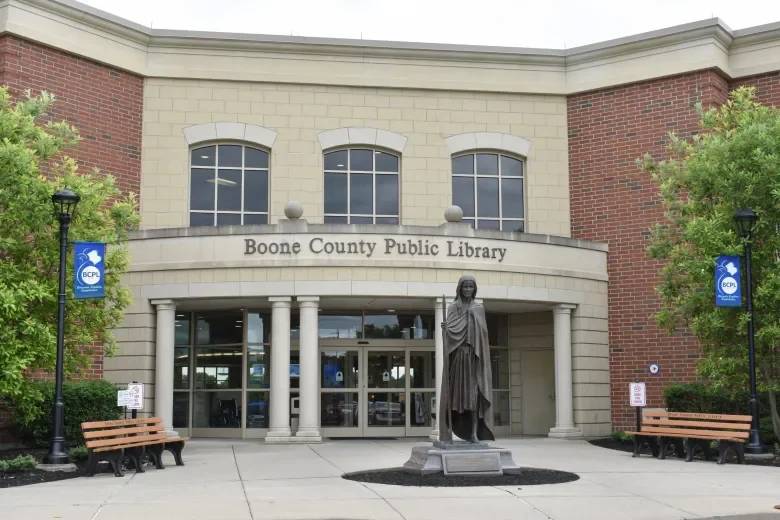
In 1755 colonial heroine Mary Draper Ingles spent part of her Shawnee captivity at Big Bone Lick, Ky. And near what is today’s Portsmouth, Ohio. The people of Kentucky, West Virginia, Ohio, and Virginia have embraced the frontierswoman’s famous story, and in 2008, she was honored with a bronze statue in front of Boone County, KY, Public Library.
Each year West Virginia honors Mary Draper Ingles with festivals and reenactments; in addition, a bridge in Summers County and a trail in Putnam County are named in her honor.
This collective monument acknowledges the brave, creative and wise contributions of Virginian women. The monument is a metaphor for the often unrecognized voices that have been responsible for shaping our culture, country and Commonwealth for more than 400 years. Its thought-provoking presence complements the traditional heroic monuments that have long stood on Capitol Square. Voices from the Garden honors notable Virginians through an installation composed of historically accurate sculptural representations, designed by Ivan Schwartz of StudioEIS in Brooklyn, N.Y. More than 200 women are honored on the glass Wall of Honor.
The monument features seven, life-sized bronze statues of women from throughout the Commonwealth’s history: Cockacoeske, Pamunkey chieftain; Anne Burras Laydon, Jamestown colonist; Mary Draper Ingles, frontierswoman; Elizabeth Keckly, seamstress and confidante to Mary Todd Lincoln; Laura Copenhaver, entrepreneur in the textile industry; Virginia Randolph, educator; Adèle Clark, suffragist and artist.
1000 Bank St., Richmond, VA 23219
(Inside 9 and Grace Street Entrance to Capitol Square)